8 Best AI Writing Tools Like ChatGPT (2026)
ChatGPT changed how people write. But after a few months of using it for everything from blog posts to emails to social captions, you start noticing the cracks. The output has a recognizable “ChatGPT voice” that readers (and Google) are starting to spot. It fabricates citations with total confidence. It loses coherence in long documents. And it has zero built-in SEO tools, which means anything you write for search needs a separate optimization step.
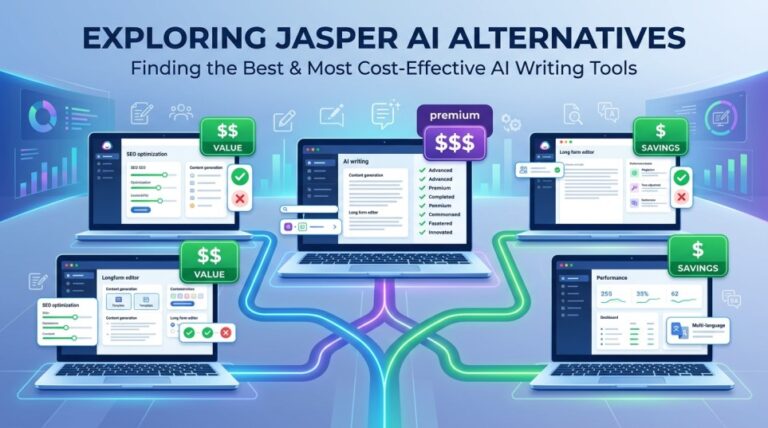
I’ve been testing AI writing tools for the past year, and the landscape has splintered in a way that works in your favor. There isn’t one tool that does everything best anymore. There are tools that write more naturally than ChatGPT, tools that cost less, tools that bundle SEO research, and tools built for specific content types. The trick is knowing which one solves your specific problem.

Here are the best AI writing tools like ChatGPT in 2026, organized by what they actually do better. I tested each one on the same content projects so the comparisons are real, not just feature lists.
Why Look Beyond ChatGPT for Writing?
Before I recommend alternatives, let me be honest: ChatGPT is still the most versatile AI writing tool available. If you want one tool that handles brainstorming, drafting, editing, coding, and conversation, it’s hard to beat. The Plus plan at $20/month gives you access to GPT-5.4, image generation with DALL-E, web browsing, deep research, and file analysis. There’s also a newer Go plan at $8/month if you need more than the free tier but don’t need every feature.
But “most versatile” doesn’t mean “best at everything.” After running the same blog brief through eight different tools, here’s where ChatGPT consistently falls short compared to specialized alternatives.
The writing sounds like ChatGPT. You know the voice. “In today’s fast-paced world.” “It’s important to note.” “Let’s dive in.” Readers recognize it. Professors recognize it. Even Google’s algorithms are getting better at detecting the pattern. Other tools produce more natural, varied prose.
No SEO tools built in. ChatGPT writes content. It doesn’t research keywords, analyze competitor pages, score your content against the SERPs, or optimize for search intent. If ranking on Google matters, you need a separate tool or a different platform entirely.
Long documents lose coherence. Around the 3,000-word mark, ChatGPT starts forgetting what it wrote at the beginning. Your conclusion might contradict your introduction. Sections repeat the same points. Other tools with larger context windows handle this better.
No brand voice memory. ChatGPT has Custom Instructions, but they’re limited. It can’t learn your specific writing style from reference material the way dedicated marketing tools can. Every conversation starts mostly from scratch.
If any of these problems sound familiar, the tools below solve them.
Best AI Writing Tool for More Natural Prose

Claude
Price: Free (limited) | $20/month (Pro) | $100-200/month (Max)
Claude is the AI writing tool I’d recommend first to anyone frustrated by ChatGPT’s generic output. In side-by-side comparisons, most readers find Claude’s writing more natural and human-sounding than ChatGPT’s. The writing feels like a thoughtful draft rather than an AI template. It handles nuance and tone better, follows subtle style instructions more accurately, and maintains consistent voice over longer pieces.
The 200,000-token context window on consumer plans is Claude’s other major advantage. You can paste an entire manuscript, style guide, and outline into one conversation and Claude will work with all of it. ChatGPT’s context is effective but can still lose track in very long documents. Claude also now supports up to 1 million tokens on the API for developers building with it.
I tested both on a 2,000-word article about content marketing strategy. ChatGPT’s draft had that polished-but-hollow quality. Correct structure, decent points, but every paragraph sounded the same. Claude’s version had more varied sentence lengths, better transitions, and a tone that matched the casual-but-authoritative voice I’d requested. It needed about 15 minutes of editing. ChatGPT’s needed 30.
Claude Pro at $20/month is the same price as ChatGPT Plus. For anyone whose primary need is quality long-form writing, Claude is the better investment at identical cost. If you need even more capacity, the Max plans at $100/month (5x usage) and $200/month (20x usage) remove most rate limits entirely.
What Claude does better than ChatGPT: Long-form writing quality, instruction following, maintaining tone over long pieces, handling massive reference documents.
What ChatGPT does better: Image generation, plugins, web browsing, coding tools, broader feature set overall.
Best for: Writers, bloggers, and content creators who care about how the words sound. Anyone producing long-form content who’s tired of the “ChatGPT voice.”
Read the full ChatGPT vs Claude vs Perplexity comparison.
Best AI Writing Tool for Research-Backed Content
Perplexity
Price: Free | $20/month (Pro)
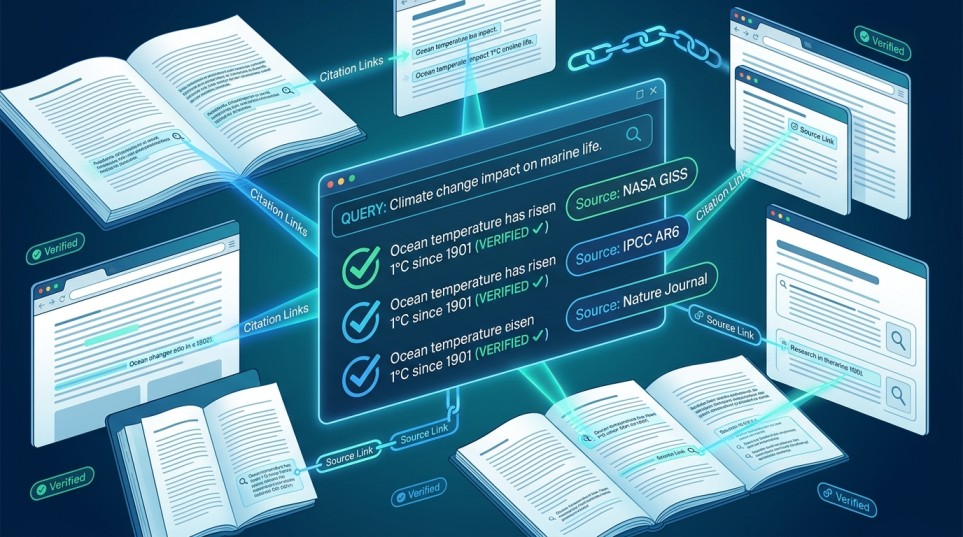
If your biggest problem with ChatGPT is that it makes things up, Perplexity is the fix. Every answer comes with inline citations and clickable source links. You ask a question, you get a sourced answer. No guessing where the information came from.
For content creators, this changes the research phase completely. Instead of opening a dozen tabs, scanning articles, and pulling facts together, Perplexity synthesizes information from multiple sources into a coherent, cited response. The Deep Research feature on the Pro plan goes further, spending several minutes conducting a multi-step investigation and producing a sourced report.
I used Perplexity to research a competitor analysis piece last month. What would have taken 45 minutes of manual Googling took about 10 minutes, and every claim came with a source I could verify. For any content that needs to be accurate and current, Perplexity is the tool ChatGPT should have been.
What Perplexity does better than ChatGPT: Sourced answers, real-time information, fact-checking, research synthesis.
What ChatGPT does better: Creative writing, image generation, diverse content types, conversational flexibility.
Best for: Journalists, researchers, content marketers writing data-driven pieces, and anyone who needs verifiable facts in their content.
Best AI Writing Tool with Built-In SEO and AI Visibility
Writesonic
Price: Free (limited) | From $39/month (Lite, annual billing) | $49/month (monthly)
ChatGPT writes content. Writesonic writes content that’s engineered to rank, and now tracks how your brand appears in AI-generated search answers too. It includes keyword research, content optimization scoring, integration with Ahrefs and Google Search Console, and GEO (Generative Engine Optimization) tracking that monitors your brand’s visibility across ChatGPT, Gemini, Perplexity, and Google AI Overviews.
The AI Article Writer generates full-length blog posts with SEO-optimized headings, keyword placement, and structure based on what’s already ranking for your target keyword. Chatsonic, Writesonic’s conversational interface, works like ChatGPT but with built-in access to current web data and AI models including GPT-4o and Claude.
I compared the same blog post generated in ChatGPT and Writesonic. ChatGPT’s was better written. Writesonic’s was better optimized. The Writesonic version came pre-structured for the target keyword with relevant headings, keyword distribution, and an optimization score. ChatGPT’s needed manual SEO work using a separate tool. For writers who publish to rank, Writesonic saves a significant step.
Writesonic is pricier than ChatGPT Plus ($39/month vs $20/month), but that gap closes fast when you factor in the SEO tools. Adding a separate SEO tool like Surfer ($89+/month) to ChatGPT would cost you far more than Writesonic’s all-in-one pricing. The Professional and Advanced plans ($99+ and custom pricing) add deeper GEO analytics, sentiment analysis, and AI prompt search volume data.
What Writesonic does better than ChatGPT: SEO optimization, keyword research, content scoring, GEO/AI visibility tracking, real-time web access via Chatsonic.
What ChatGPT does better: Writing polish for non-SEO content, conversational flexibility, image generation, coding.
Best for: SEO-focused bloggers and content marketers who want writing, optimization, and AI search visibility tracking in one platform.
Best AI Writing Tool for Marketing Teams
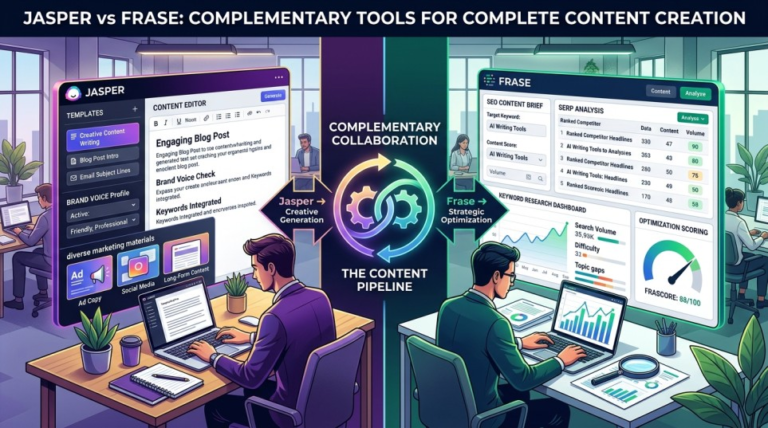
Jasper AI
Price: $49/month (Creator) | $69/month (Pro)
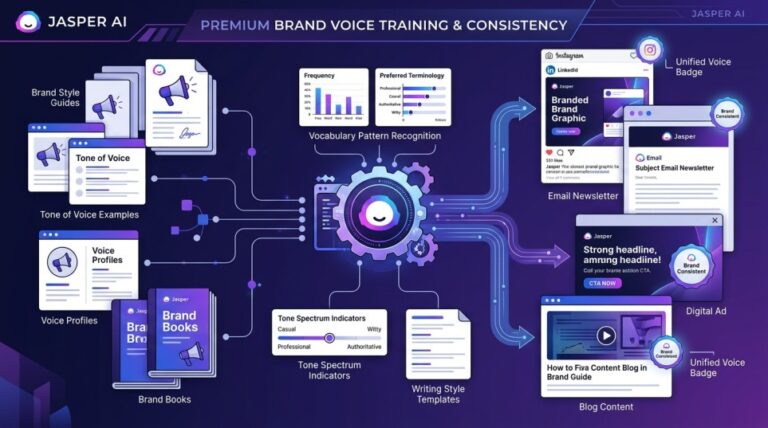
Jasper is what ChatGPT would be if it were built exclusively for marketing teams. It has 50+ content templates, brand voice training that learns from your reference content, team collaboration with role-based permissions, and AI image generation with Jasper Art. Everything is designed around producing brand-consistent marketing content at scale.
The brand voice feature is Jasper’s biggest differentiator. Upload your content, style guides, and website URLs and Jasper analyzes your tone, vocabulary, and sentence patterns. It then applies that voice across everything it generates. I uploaded three blog posts from a client and Jasper’s output noticeably matched the client’s style. ChatGPT’s Custom Instructions can’t get close to this level of brand consistency.
Jasper costs more than ChatGPT ($49-69/month vs $20/month), and it doesn’t include SEO tools natively (you’d need Surfer SEO as a separate addon). But for marketing teams that need consistent brand voice across multiple writers and channels, Jasper fills a gap ChatGPT can’t.
What Jasper does better than ChatGPT: Brand voice training, marketing templates, team collaboration, content campaign management.
What ChatGPT does better: Price, versatility, coding, general-purpose tasks beyond marketing.
Best for: Marketing teams and agencies managing brand-consistent content across multiple channels and client accounts.
Read the full Jasper AI vs Copy.ai comparison.
Best AI Writing Tool for Short-Form Copy and GTM Workflows
Copy.ai
Price: Free | $29/month (Chat) | $1,000/month (Growth)
Copy.ai does two things ChatGPT doesn’t: marketing-specific templates (90+ of them) and workflow automation for go-to-market teams. You can chain together AI actions into repeatable sequences: research a prospect, draft a personalized email, enrich a CRM record, generate social posts. All automated.
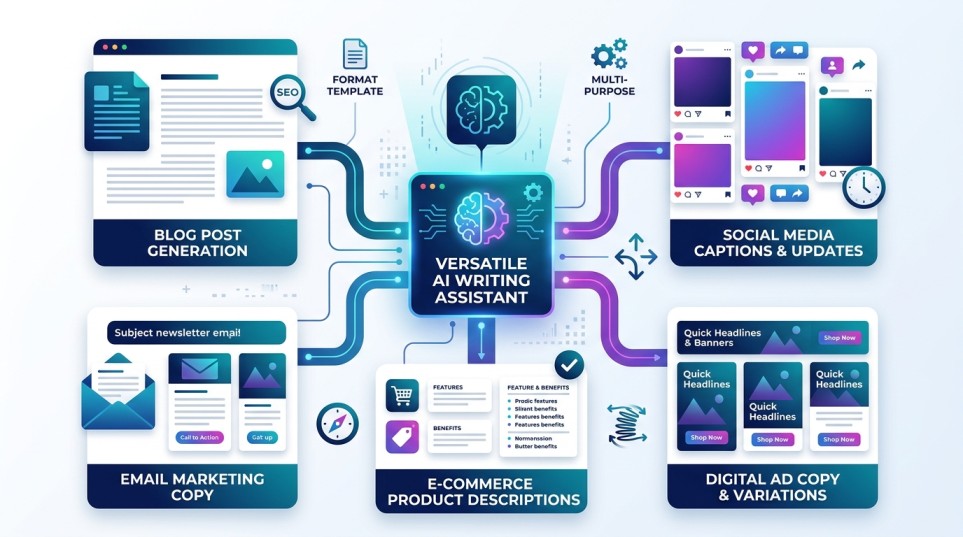
The free tier is one of the most generous available. Unlimited projects and access to 90+ copywriting templates at no cost. For anyone who mainly needs short-form marketing copy like ad variations, email subject lines, and social captions, Copy.ai’s free plan covers a lot of ground that ChatGPT charges $20/month for.
The tradeoff: long-form blog writing is weak. Copy.ai’s blog output is generic and needs heavy rewriting. And the pricing jump from $29/month to $1,000/month for workflow automation features is enormous, with nothing in between. For short-form marketing copy and sales automation, it’s excellent. For blog posts, look elsewhere.
What Copy.ai does better than ChatGPT: Marketing templates, GTM workflow automation, free tier for short-form copy.
What ChatGPT does better: Long-form content, creative writing, coding, general versatility.
Best for: Marketing and sales teams that need high-volume short-form copy and automated GTM workflows.
Best AI Writing Tool for Full-Stack SEO Content
Scalenut
Price: $39/month (Essential) | $79/month (Growth) | $149/month (Pro)
Scalenut is the furthest thing from a “tool like ChatGPT,” yet it’s one of the best alternatives for content creators focused on search rankings. It bundles keyword research, SERP analysis, NLP optimization, real-time content scoring, and AI writing into one platform. Its Cruise Mode generates a full SEO-optimized article from a single keyword in minutes.
The writing quality is more mechanical than ChatGPT’s, but the SEO foundation is dramatically stronger. I tested the same keyword in both tools. ChatGPT produced a well-written but unoptimized article. Scalenut analyzed the top competitor pages, identified keyword gaps, and generated a draft with strong SEO optimization from the start. The ChatGPT version would have needed a separate tool and significant extra work to reach the same optimization level.
Scalenut also includes GEO Watchtower, which tracks how your content appears in AI-generated search answers from ChatGPT, Perplexity, and Google AI Overviews. For content teams thinking about where SEO is heading, this is a feature nobody else in this list offers at this price point.
What Scalenut does better than ChatGPT: Keyword research, SERP analysis, content optimization, Cruise Mode automation, GEO tracking.
What ChatGPT does better: Writing quality, creative flexibility, conversational interface, coding, general-purpose tasks.
Best for: SEO teams and content operations that need research, writing, and optimization in one platform.
Best Free AI Writing Tool (Like ChatGPT but Cheaper)
Google Gemini
Price: Free | $19.99/month (Advanced)
If your main reason for looking beyond ChatGPT is price, Google Gemini is the strongest free alternative. It handles writing, brainstorming, research, and conversation at a level that’s competitive with ChatGPT’s free tier. The integration with Google Workspace means you can use it directly in Docs, Gmail, and Sheets without switching tabs.
The Deep Research feature (available on the Advanced plan) is particularly strong for long-form content research. Gemini also handles real-time information well, pulling from Google Search for current data.
The writing quality is a step below ChatGPT and Claude for creative content, but for informational articles, product descriptions, and business writing, it’s more than competent. If you’re deep in the Google ecosystem already, Gemini fits into your workflow with minimal friction.
Worth noting: ChatGPT’s free tier now includes ads (in the US as of February 2026) and has tight message limits (roughly 10 messages every 5 hours before falling back to a weaker model). Gemini’s free tier doesn’t have ads and integrates natively with Google apps, which could tip the balance for some users.
What Gemini does better than ChatGPT: Google Workspace integration, real-time information, ad-free experience on free tier.
What ChatGPT does better: Creative writing quality, plugin ecosystem, Custom GPTs, image generation quality.
Best for: Google Workspace users who want a capable free AI writing tool integrated into their existing workflow.
Best Budget AI Writing Tool
Rytr
Price: Free (10K characters) | $9/month (Saver, unlimited) | $29/month (Premium)
Rytr costs $9/month for unlimited AI writing. That’s less than half the price of ChatGPT Plus. For students, freelancers, and solo creators who need basic AI writing assistance without spending $20/month, Rytr is the most affordable option that still produces usable content.
It has 40+ use case templates, 20+ tones, 30+ languages, and a plagiarism checker. The writing quality is a clear step below ChatGPT’s, and it struggles with long-form content (generating in short chunks that need manual stitching). But for social posts, product descriptions, email copy, and ad variations, Rytr delivers at a price point nobody else matches.
What Rytr does better than ChatGPT: Price (by far). Template-driven workflow for marketing content.
What ChatGPT does better: Writing quality, long-form content, versatility, features.
Best for: Budget-conscious creators who need basic AI writing for short-form content.
Best AI Writing Tool for Editing and Grammar
Grammarly
Price: Free | $12/month (Pro)
Grammarly isn’t a ChatGPT alternative in the traditional sense. You don’t use it to generate content from scratch. But it solves a problem that ChatGPT doesn’t address at all: making your existing writing better in real time, everywhere you type.
The browser extension works inside Gmail, Google Docs, Slack, LinkedIn, and across your entire browser. It catches grammar errors, suggests clarity improvements, detects tone, and on the Pro plan, offers full-sentence rewrites and plagiarism checking. No other tool on this list provides this kind of invisible, always-on editing layer.
The smart combo: use ChatGPT or Claude for generating and brainstorming, then let Grammarly catch the errors and improve clarity across everything you write. Together they cover creation and polish.
What Grammarly does better than ChatGPT: Real-time editing across all apps, grammar accuracy, tone detection, always-on correction.
What ChatGPT does better: Content generation, brainstorming, conversational AI, coding.
Best for: Anyone who writes across multiple apps and wants automatic grammar, clarity, and tone improvement without thinking about it.
💡 Most tools above offer free plans. Try our top 3 picks to find your favorite.
How to Pick the Right Tool (Decision Framework)
After testing all of these, here’s the fastest way to decide.
If ChatGPT’s writing sounds too generic: Switch to Claude. Better prose, more natural voice, stronger long-form output. Same price ($20/month).
If you need content that ranks on Google: Writesonic ($39/month+) or Scalenut ($39-79/month) for built-in SEO and GEO tools. ChatGPT alone won’t get your content ranked without separate optimization work.
If you need sourced, accurate information: Use Perplexity for research (free or $20/month). Every answer comes with citations. Then write in ChatGPT or Claude using the sourced material.
If you manage brand voice across a team: Jasper ($49-69/month) has the deepest brand voice training. Worth the premium for agencies and marketing teams.
If budget is the priority: Rytr at $9/month for basic writing. Google Gemini free for a general-purpose ChatGPT replacement. Copy.ai free for marketing templates.
If you just want everything to be cleaner: Add Grammarly (free) on top of whatever tool you’re already using. It makes everything better.
The Best Combo Setups (What I Actually Use)
In practice, the best approach isn’t picking one tool. It’s combining two that handle different parts of the workflow.
For SEO blog content: Perplexity (research) + Claude (writing) + Grammarly (editing). Total: $20-40/month. Better research, better writing, and better editing than ChatGPT alone.
For marketing teams: Jasper (writing with brand voice) + Grammarly (editing). Total: $49-81/month. Brand-consistent content with automatic error catching.
For budget creators: ChatGPT free (brainstorming) + Grammarly free (editing). Total: $0. The best you can do without spending anything.
For maximum SEO and AI visibility: Scalenut (research + writing + optimization) alone. Total: $39-79/month. Complete pipeline in one tool.
Quick Comparison: All Tools at a Glance
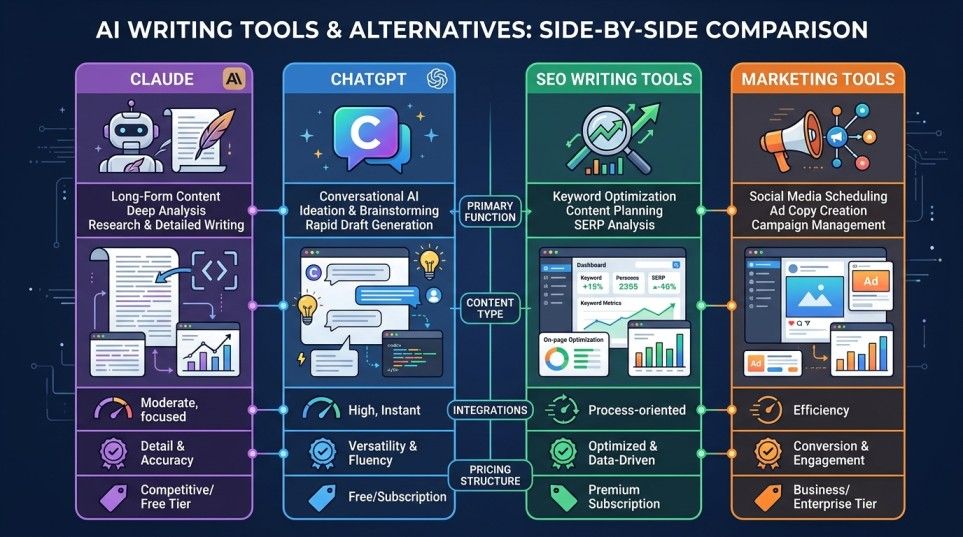
Claude — $20/month — Best writing quality — No SEO, no image generation — For writers who care about prose
Perplexity — $20/month — Best for research with citations — Weak creative writing — For fact-based content
Writesonic — From $39/month — Built-in SEO + GEO tracking — Pricier than ChatGPT — For SEO-focused marketers
Jasper — $49-69/month — Best brand voice training — No SEO, premium price — For marketing teams
Copy.ai — Free-$29/month — Best free tier, GTM automation — Weak long-form, pricing gap — For short-form marketing
Scalenut — $39-79/month — Full-stack SEO + GEO platform — Writing less polished — For SEO content operations
Google Gemini — Free-$19.99/month — Google integration, no ads on free tier — Weaker creative output — For Google Workspace users
Rytr — $9/month — Cheapest unlimited writing — Lower quality, no long-form — For budget creators
Grammarly — Free-$12/month — Always-on editing everywhere — Not a content generator — For everyone (use alongside other tools)
Frequently Asked Questions
What AI writing tool is better than ChatGPT?
It depends on the task. Claude writes more naturally and handles long-form better. Perplexity provides sourced research. Writesonic and Scalenut include SEO tools ChatGPT lacks. Jasper offers deeper brand voice training. No single tool beats ChatGPT at everything, but several beat it at specific things.
What’s the best free AI writing tool like ChatGPT?
Google Gemini is the closest free equivalent for general-purpose writing, with the added benefit of no ads on the free tier (ChatGPT’s free version now shows ads in the US). Copy.ai’s free tier is best for marketing copy specifically. Claude’s free tier produces the highest quality writing but with tighter usage limits. Combine any of these with Grammarly free for a solid zero-cost toolkit.
Is Claude better than ChatGPT for writing?
For prose quality, most users find Claude’s output more natural and human-sounding. It sounds less like an AI template, handles tone better, and maintains consistency over longer pieces. ChatGPT is more versatile overall (images, coding, plugins), but for pure writing quality, Claude has the edge at the same $20/month price.
Do I need an AI writing tool with SEO built in?
If you publish content that needs to rank on Google or appear in AI-generated search answers, yes. ChatGPT writes content but doesn’t optimize it for search. Tools like Writesonic and Scalenut include keyword research, content scoring, SERP analysis, and GEO tracking that save you from needing a separate $89+/month SEO tool.
Can I just use ChatGPT for everything?
You can, and for many people it’s the right choice. ChatGPT is the most versatile AI writing tool available. The alternatives on this list solve specific problems: better writing quality, built-in SEO, sourced research, brand voice, or lower price. If none of those problems apply to you, ChatGPT Plus at $20/month is still the best all-around option.
What’s the cheapest AI writing tool similar to ChatGPT?
Rytr at $9/month for unlimited writing. Google Gemini is free and handles most general writing tasks. ChatGPT’s Go plan at $8/month is a new budget option, though it includes ads and excludes advanced features like deep research and advanced reasoning. For the absolute cheapest, combine ChatGPT free + Grammarly free for $0/month total.
Which AI writing tool is best for blogging?
For writing quality: Claude ($20/month). For SEO-optimized blogs: Writesonic (from $39/month) or Scalenut ($39-79/month). For brand-consistent blog content at scale: Jasper ($49-69/month). For a free option: ChatGPT free or Google Gemini free, paired with Grammarly free.
How much does ChatGPT cost in 2026?
ChatGPT now has four individual tiers: Free (with ads in the US, limited to ~10 messages/5 hours), Go ($8/month with ads, more usage), Plus ($20/month, full features), and Pro ($200/month, unlimited). Business plans start at $25/user/month. The Plus plan at $20/month remains the sweet spot for most professional users.